
Central Serous Chorioretinopathy (CSCR)
What is Central Serous Chorioretinopathy?
Central Serous Chorioretinopathy (CSCR) is a retinal condition affecting the macula, the central part of the retina responsible for sharp and detailed vision.
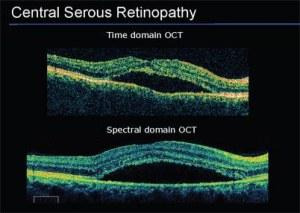
It is characterized by the accumulation of fluid underneath the retina, leading to a localized separation of the retinal layers and causing blurred or distorted central vision.
CSCR is now considered part of the pachychoroid spectrum of diseases, a group of conditions associated with increased thickness and abnormal function of the choroid—the vascular layer located beneath the retina.
CSCR most commonly affects adults between 20 and 60 years of age and occurs more frequently in men, although women are also commonly affected.
Symptoms of CSCR
Common symptoms include:
- Blurred central vision
- Distortion of straight lines (metamorphopsia)
- A dark or gray area in the center of vision
- Reduced contrast or faded colors
- Objects appearing smaller or farther away (micropsia)

Diagnosis of CSCR
Diagnosis requires a complete ophthalmic examination and specialized retinal imaging.
- Funduscopy following dilation, revealing fluid accumulation beneath the macula
- OCT (Optical Coherence Tomography), which accurately images the height, volume, and extent of the fluid, allowing for monitoring of its progression
- Fluorescein or indocyanine angiography, when considering possible laser treatment or in cases of atypical or chronic forms
These tests confirm the diagnosis and help determine the appropriate monitoring or treatment strategy.
What is the treatment for central serous chorioretinopathy?
In 95% of cases, central serous chorioretinopathy (CSC) resolves spontaneously without any intervention. The first line of treatment is to avoid risk factors, particularly stress and corticosteroids.
Treatment is required when:
- the fluid persists for more than 2–3 months,
- There is a risk of permanent damage to the cells of the macula,
- The condition becomes chronic or recurs frequently.
In these cases, the following apply:
Photodynamic therapy (cold laser)
Thermal laser
Newer treatments currently under study
- Hormone therapy (mifepristone – RU486)
- Micropulse diode laser
Frequently Asked Questions
The onset and severity of COPD are associated with:
- Stress and Type A Personality (people with high stress levels, workaholics, competitive individuals)
- Use of cortisone (tablets, injections, inhalers)
- Pregnancy, during which the condition may manifest more aggressively
- Recap of the Previous Episode of KOH
Patients with a history of COPD should—whenever medically feasible—avoid the systematic use of cortisone.
A doctor who specializes in this condition