

SERVICES / CATARACT

Eye cataract

What is it, what symptoms does it cause, and how is it treated with modern microsurgery at Athens Vision?

What is a cataract?

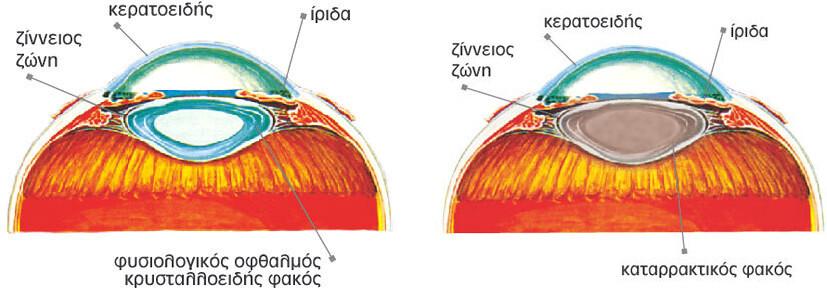
A cataract is the clouding of the eye’s crystalline lens.

The eye’s natural lens (crystalline lens) is clear and is located behind the iris. Light passes through it to reach the retina at the back of the eye.

With age, this lens gradually loses its transparency and becomes cloudy, resulting in an age-related cataract. Epidemiological studies show that the prevalence of cataracts is approximately 50% among people aged 65–74 and rises to around 70% in those over 75.

Although cataracts are most commonly associated with ageing, they can also occur in younger adults and even in infants. Cataracts may develop as a result of ocular trauma, certain medications, systemic diseases, or radiation exposure or may even be present from birth (congenital cataracts).

Causes of Cataracts

Cataracts can develop for many reasons. The most common is the natural ageing process, during which the crystalline lens gradually loses its transparency.

They may also develop following eye injuries or previous ocular surgery. Certain medications, such as prolonged corticosteroid therapy, increase the risk, while systemic conditions such as diabetes or chronic inflammation are also associated with an increased risk of cataract formation.

Exposure to ultraviolet (UV) radiation also plays a significant role, as it may accelerate the clouding of the crystalline lens. In some cases, cataracts may be congenital, due to genetic factors or conditions affecting the eye during fetal development.

Cataract Symptoms

The most common symptoms associated with cataracts are:

  • Blurred or reduced distance and near vision
  • Reduced colour perception
  • Blurred vision and reduced contrast sensitivity, particularly in bright light
  • New-onset or worsening myopia
  • Glare, light sensitivity, and halos around lights, especially when driving at night

These symptoms may interfere with everyday activities, including:

  • Driving, particularly at night
  • Reading or watching television.
  • Writing or other activities that require detailed near vision

Cataract Diagnosis

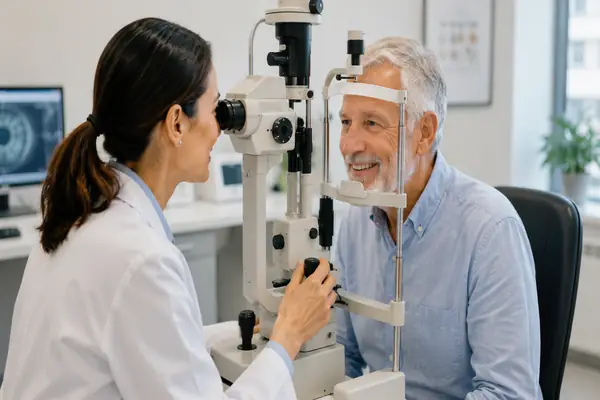
Cataracts are diagnosed through a comprehensive eye examination by a specialized ophthalmologist.

The examination includes measurement of visual acuity, a thorough examination of the crystalline lens to detect lens opacification, and evaluation of the retina and other ocular structures to rule out any coexisting ocular conditions.

This allows the ophthalmologist to determine both the severity of the cataract and its impact on visual function.

Treatment

In the early stages of cataracts, updating your glasses prescription may help improve vision temporarily. However, once the cataract progresses, the only effective treatment is surgery.

Currently, there are no eye drops or medications that can prevent, slow, or reverse cataract formation.

What are the stages of cataract surgery?

Cataract surgery at Athens Vision involves the following steps:

Preparation
Your visit to Athens Vision typically lasts approximately three hours. Eye drops are administered approximately half an hour before the procedure. In selected cases, preoperative medication may also be prescribed during the 2–3 days before the procedure.

Surgery
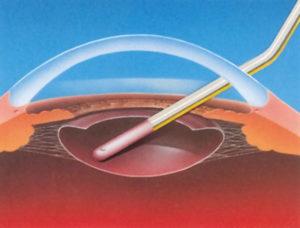
Cataract surgery usually lasts about 15 minutes. During the procedure, the surgeon removes the cloudy natural lens using phacoemulsification (ultrasound), through a self-sealing 2.2-mm corneal incision.

Next, the new intraocular lens is inserted through the same incision and positioned inside the capsular bag.

In the vast majority of cases, no sutures are required, and no eye patch is necessary after surgery.

When does vision return after cataract surgery?

In the vast majority of cases, improved vision is noticeable immediately or within the first few days after cataract surgery. In the first few hours, vision may remain slightly blurry, partly due to the eye drops used to dilate the pupil.

The time it takes for vision to fully stabilize may vary from patient to patient and depends on the condition of the eye, the presence of other eye conditions, and the type of intraocular lens that has been implanted.

After cataract surgery, the patient receives detailed and personalized postoperative instructions from the Athens Vision medical team.

Modern Cataract Removal Technology

The phacoemulsification method, first introduced by Charles Kelman in the late 1960s, has evolved rapidly over the past two decades.

Modern systems incorporate active fluidics and real-time intraocular pressure control, torsional ultrasound that significantly reduces the amount of ultrasound energy delivered to the eye, as well as automatic parameter adjustment throughout each stage of the procedure.

Athens Vision has consistently invested in the latest generation of phacoemulsification systems, enabling the safe removal of even dense cataracts while minimizing cumulative ultrasound energy (low-energy phacoemulsification).

This technology helps reduce postoperative inflammation, minimizes corneal endothelial cell loss, and promotes faster visual recovery.

Χειρουργική καταρράκτη με λέιζερ: Χειρουργική καταρράκτη με τη βοήθεια λέιζερ φεμτοδευτερολέπτου – FLACS

In select cases, laser cataract surgery may be performed using a femtosecond laser during specific stages of the procedure.

Specifically, steps in the procedure—such as the corneal incision, capsulorhexis, and fragmentation of the lens nucleus—can be performed using a femtosecond laser rather than manually.

This method offers increased accuracy and reproducibility, especially when the procedure is combined with the implantation of a premium intraocular lens, such as a toric or trifocal lens. In these cases, proper centering and stability of the lens position are critical to the final visual outcome.

The recommendation for treating cataracts with a laser and using FLACS is made on an individualized basis by the surgeon, following an evaluation of the anatomical characteristics of the eye and the intraocular lens to be implanted.

Cataract Prevention

Although age-related cataracts cannot always be prevented, certain measures may help reduce the risk or delay their development. These include regular eye examinations, especially after the age of 50, as well as protection from ultraviolet (UV) radiation by wearing sunglasses with certified UV protection.

Proper management of chronic conditions, such as diabetes, may also help reduce the risk of cataract development, as does protecting the eyes from injury and avoiding unnecessary or prolonged use of medications, particularly corticosteroids, when medically appropriate, that may affect the crystalline lens.

Frequently Asked Questions

Modern cataract surgery no longer requires the cataract to “mature” before it is removed. This change is due to advances in ophthalmic microsurgery, which have made the procedure safer, more precise, and virtually painless. In fact, cataract surgery is generally easier when the lens is not excessively dense, as modern phacoemulsification techniques fragment the cataract inside the eye before it is removed. In cases of very advanced cataracts, more complex surgical techniques may occasionally be required, limiting some of the advantages offered by modern microsurgical technology.

Cataract surgery is recommended when the cataract begins to interfere with the patient’s vision and daily activities. Typically, patients experience difficulty driving, especially at night, require frequent changes to their glasses prescription, and report problems with reading, watching television, sewing, or other visually demanding tasks. However, because vision loss is gradual, patients may not immediately recognize the extent of their visual decline.

Immediately after the procedure, the patient and their family will be informed about the outcome of the surgery and will receive detailed postoperative instructions from the Athens Vision team.
In the vast majority of cases, vision improves rapidly, allowing patients to resume most of their normal daily activities within a short period of time.

No. Cataract surgery is performed at the Athens Vision Microsurgery Center as an outpatient procedure.
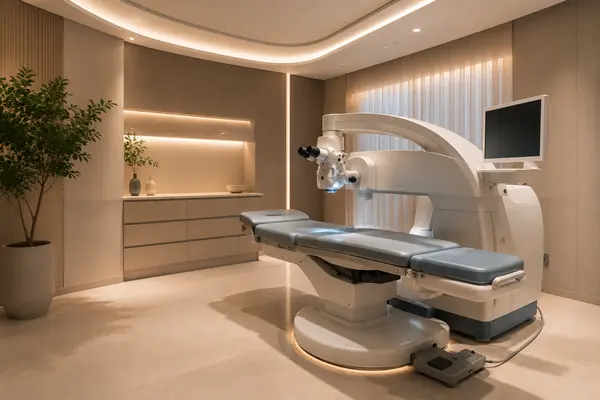
The center is equipped with state-of-the-art technology and operates in accordance with the highest international standards.
Patients return home on the same day, following the internationally accepted principles of day-case surgery.
In most cases, anesthesia is provided using anesthetic eye drops only.
An experienced anesthesiologist is always present to ensure patient comfort and safety, particularly for patients who are anxious or have underlying medical conditions.
Cataract: Surgery

The quality and optical characteristics of intraocular lenses (IOLs) used in cataract surgery vary significantly between different lens designs and manufacturers. At Athens Vision, we use premium intraocular lenses from leading manufacturers in the United States and Europe. These intraocular lenses are manufactured from high-quality materials and incorporate advanced optical technologies, including aspheric optics, hydrophobic acrylic material, UV-filtering technology, toric correction for astigmatism, and implantation through micro-incisions.

Beyond conventional monofocal intraocular lenses, which correct distance vision, modern technology offers premium intraocular lenses that simultaneously address presbyopia and coexisting refractive errors, often reducing or even eliminating the need for glasses after surgery. The main categories include enhanced monofocal, extended depth of focus (EDOF), trifocal, and toric intraocular lenses. Toric lenses correct corneal astigmatism and are available in several of these categories. The selection of the most appropriate intraocular lens is tailored to each patient following a comprehensive preoperative assessment and detailed discussion, taking into account the anatomy of the eye, the patient’s visual needs, and individual expectations.

The ophthalmologists at Athens Vision have extensive experience in premium intraocular lens implantation and have participated in the clinical evaluation and adoption of advanced intraocular lens technologies in Greece and Europe. Their expertise helps ensure that each patient receives the most appropriate lens based on their individual visual needs and lifestyle.

Before surgery, your ophthalmologist will discuss the potential risks and possible complications of cataract surgery in detail, including infection, inflammation, residual refractive error, vitreous prolapse, corneal complications, elevated intraocular pressure, retinal detachment, intraocular lens decentration, posterior capsule opacification, reduced visual acuity, haemorrhage, and other rare complications.

Serious complications are uncommon, particularly when surgery is performed by experienced surgeons using modern equipment in a dedicated ophthalmic surgical center.
One of the strengths of Athens Vision is the availability of ophthalmologists specializing in all major subspecialties, allowing prompt multidisciplinary management should a rare complication arise.

Once the cataract is removed and the intraocular lens is implanted, the cataract cannot recur. In extremely rare cases, opacification of the intraocular lens itself has been reported due to manufacturing defects, requiring lens exchange.

Over time, some patients may develop a thin membrane behind the intraocular lens (posterior capsule opacification, commonly referred to as a “secondary cataract”), which can impair vision. With modern hydrophobic acrylic intraocular lenses, the incidence has been significantly reduced, although it remains a possibility. The condition is easily treated with a painless outpatient Nd:YAG laser capsulotomy, without the need for further surgery.

Cataract: Is it coming back?

The cost varies from patient to patient, as it depends on the solution that best meets each individual’s needs, and choosing the right intraocular lens is crucial here. At Athens Vision, we work with you to design the ideal treatment plan based on your lifestyle, profession, and needs, conducting a detailed evaluation of your eye health, biometrics, cornea, and retina. The exact price is determined following this personalized examination by an ophthalmologist.
Doctors who specialize in this condition

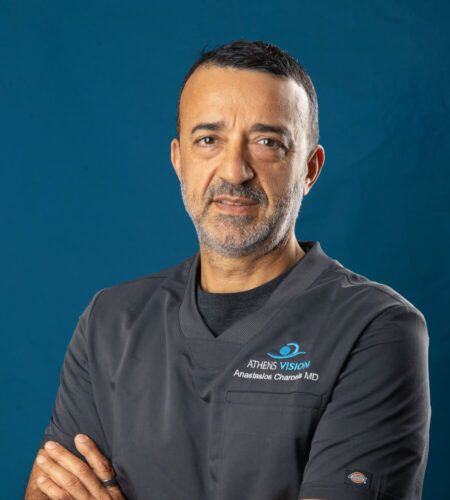
Anastasios Charonis

Ph.D. from the University of Freiburg, Board Certified by the American and European Boards of Ophthalmology

Specialties: Corneal Surgery – Transplants, Cataracts, Refractive Surgery, Pediatric Ophthalmology, Strabismus

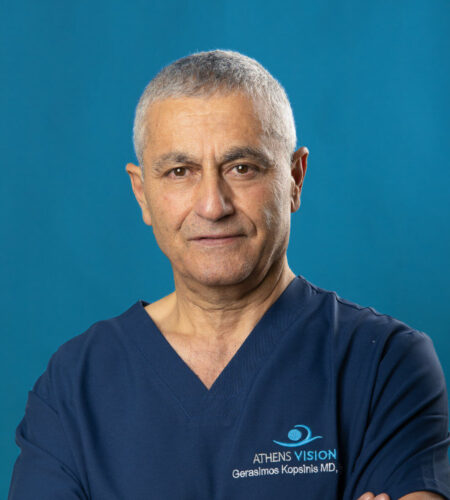
Gerasimos Kopsinis

Director of the Glaucoma Department at AthensVision, PhD from the University of Athens
Specialties: Glaucoma, Cataracts

Theodoros Filippopoulos

Scientific Director of Athens Vision, Board Certified by the American Board of Ophthalmology
Specialties: Glaucoma Surgery, Cataract Surgery

Maria Zozolou

Graduate of the Medical School of the University of Athens, PhD from the Medical School of the University of Athens, Board Certified by the European Board of Ophthalmology
Specialties: Refractive Surgery, Cataracts

Georgia Kosti

Board Certified by the European Board of Ophthalmology, Clinical Fellow of the “G. P. Georgariou” Scholarship
Specialties: Refractive Surgery, Cataracts