

SERVICES / MACULAR DEGENERATION
Cystoid Macular Edema
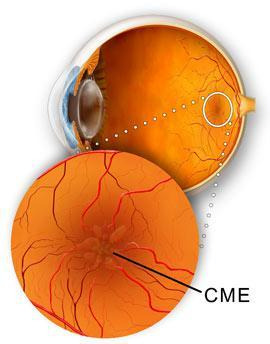
Cystoid macular edema (CME) is a retinal condition in which fluid accumulates within the macula—the central part of the retina responsible for sharp, detailed vision.
What is it?
Cystoid macular edema (CME) is a retinal condition in which fluid accumulates within the macula—the central part of the retina responsible for sharp, detailed vision.
The accumulation of fluid in small “cyst-like” spaces causes thickening (edema) of the retina, leading to reduced visual quality.
Central vision is primarily affected, while peripheral vision usually remains normal.
Central vision is primarily affected, while peripheral vision usually remains normal.
Symptoms
How can cystic macular edema manifest itself?
Cystoid macular edema may cause:
- Blurred or distorted central vision
- A sensation of reduced brightness or decreased visual clarity
- Sensitivity to light
- Difficulty reading or seeing fine details during everyday activities
- No obvious symptoms in early or mild cases
Diagnosis is made through a comprehensive retinal examination and specialized imaging tests, including:
Causes
What causes cystic macular edema?
Cystoid macular edema can occur due to several conditions, including:
- Postoperative inflammation following cataract surgery (Irvine–Gass syndrome)
- Diabetic retinopathy
- Retinal vein occlusion
- Uveitis (inflammation inside the eye)
- Eye trauma or previous eye surgery
- Side effects of certain medications
Statistics:
- Approximately 3% of patients develop cystoid edema following cataract surgery.
- If it appears in one eye, there is up to a 50% chance that it will appear in the other eye as well.
Treatment
Treatment depends on the underlying cause, severity, and duration of the edema.
The treatment approach for cystoid macular edema depends on the cause and severity of the edema:
1. Anti-inflammatory treatment
- Anti-inflammatory eye drops
- Oral medications in selected cases
- Corticosteroid injections or implants inside or around the eye
- They are often used as a first-line treatment.
2. Laser
It is used to seal microbleeds from abnormal blood vessels.
3. Vitrectomy
In persistent or complex cases, especially when there is traction on the macula, surgical removal of the vitreous (vitrectomy) may be required.
Frequently Asked Questions
With appropriate diagnosis and treatment, many patients experience significant improvement in vision.
Recovery is usually gradual and may continue over several weeks or months, depending on the cause of the edema and the condition of the retina.
It is important to follow your ophthalmologist’s advice if you have a medical condition that could affect your vision, such as cystoid macular edema. Regular checkups will help you and your ophthalmologist identify any problems that may arise quickly.
Always contact your ophthalmologist if you notice any changes in your vision, such as blurred or distorted vision.
If you experience sudden vision loss or a penetrating injury to your eye, go to the emergency room. You need immediate medical attention.
A doctor who specializes in this condition

ALEXANDER CHARONIS
Ophthalmic Surgeon
Director of the Retina Department at AthensVision, Board Certified by the American and European Boards of Ophthalmology
Specialties: Vitreoretinal Surgery, Ocular Infections