

SERVICES / MACULAR DEGENERATION
Retinal Vein Occlusion (RVO)
What is a retinal vein occlusion?
What is a retinal vein occlusion?
A retinal vein occlusion occurs when one of the veins responsible for draining blood from the retina becomes blocked.
This blockage causes increased pressure inside the affected vessels, leading to retinal hemorrhages, reduced blood flow, and leakage of fluid into the retina.
The retina is the light-sensitive layer at the back of the eye that converts light into visual signals. When its blood circulation is affected, vision may become blurred or reduced.
Retinal vein occlusion is one of the most common retinal vascular diseases, especially in older adults.
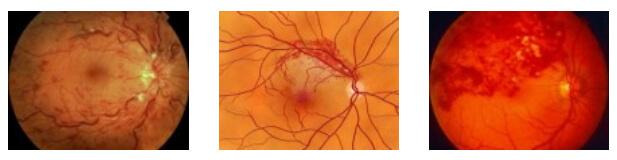
Types of Retinal Vein Occlusion
There are two main forms:
1. Central Retinal Vein Occlusion (CRVO)
The main retinal vein becomes blocked at the level of the optic nerve.
Because a larger part of the retina is affected, symptoms may be more severe.
Because a larger part of the retina is affected, symptoms may be more severe.
2. Branch Retinal Vein Occlusion (BRVO)
Smaller, peripheral veins of the retina become blocked.
The damage is more localized, but it still requires close monitoring.
The damage is more localized, but it still requires close monitoring.
If it occurs in one eye, there is about a 10% chance that it will also occur in the other eye in the future.
Which conditions increase the risk of retinal vein occlusion?
Certain medical conditions significantly increase the risk of retinal vein occlusion:
- Diabetes mellitus
- High cholesterol levels
- Glaucoma
- Hyperlipidemia
- Arteriosclerosis / Atherosclerosis
- Blood Clotting Disorders
- Smoking
- Age 50 or older
Controlling these factors is also the primary means of prevention.
What are the symptoms and complications of retinal vein occlusion?
Macular Edema
The fluid that leaks from the blood vessels accumulates in the macula, causing swelling and a loss of sharp central vision.
Patients usually report blurred vision, difficulty reading, and reduced ability to see fine details.
Patients usually report blurred vision, difficulty reading, and reduced ability to see fine details.
Development of pathological new blood vessels
When the retina is not adequately oxygenated, it develops fragile new blood vessels that:
- bleeding into the vitreous → appearance of “floaters,” shadows, or clouds
- cause traction on the retina
- can lead to detachment
Neovascular glaucoma
In severe cases, abnormal blood vessels appear in the anterior segment of the eye and block the drainage channels, leading to a painful increase in pressure.
Eye pain
It occurs mainly when neovascular glaucoma develops.
How is retinal vein occlusion diagnosed?
Retinal vein occlusion is diagnosed through a comprehensive eye exam:
- Bothoscopy: Assessment of Blood Vessels, Bleeding, and Edema
- Fluorangiography: mapping blood flow and leaks
- OCT (Optical Coherence Tomography): detailed imaging of the macula and retinal thickness
These tests allow us to determine the stage, severity, and appropriate treatment.
Treatment
Although the blocked vein itself cannot always be reopened, modern treatments can successfully control complications and preserve vision in many patients.
1. Laser Treatment
It may be used:
- to treat areas of poor retinal blood supply
- to reduce the risk of complications from abnormal new blood vessels
The goal is to stabilize vision and prevent further complications.
2. Ενδουαϊκές ενέσεις
Repeated applications are usually required.
-
Anti-VEGF therapy
- Corticosteroid Treatment
- Intravitreal implant (Ozurdex) with prolonged action
3. Vitrectomy
Vitrectomy surgery may be required in advanced complications such as:
- persistent vitreous hemorrhage
- tractional retinal problems
- selected complex cases
At Athens Vision, minimally invasive sutureless vitrectomy techniques are used whenever indicated.
Prevention and Follow-up
Reducing the risk of future vascular events requires careful control of associated conditions:
- Control of blood pressure
- Management of diabetes
- Control of cholesterol levels
- Treatment of glaucoma
- Smoking cessation
- Healthy diet and regular exercise
Patients with retinal vein occlusion require regular ophthalmic follow-up to monitor treatment response and detect possible complications early.
Frequently Asked Questions
Living with a retinal vein occlusion can be stressful, as you may need to:
- Many injections into the eyes
- Many laser treatments
- Many follow-up appointments
- Assistance with transportation to and from your appointments (if your condition or treatment prevents you from driving safely)
All of this can be overwhelming and seem unbearable. Remember that your healthcare team is there to help you.
Talk to your doctors about how you’re feeling. They may recommend resources that will help you learn more about your condition and why all this effort is so important.
Your ophthalmologist will tell you how often you need to schedule appointments for follow-up or treatment. Call your ophthalmologist if you experience new or changing symptoms or have questions about your treatment plan.
A doctor who specializes in this condition
ALEXANDER CHARONIS
Ophthalmic Surgeon
Director of the Retina Department at AthensVision, Board Certified by the American and European Boards of Ophthalmology
Specialties: Vitreoretinal Surgery, Ocular Infections