
Cornea
What is the cornea?
The cornea is the transparent front layer of the eye.
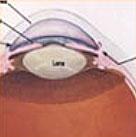
The basic structure of the cornea is simple.
It consists of:
the epithelium
the stroma,
the endothelium.
Corneal opacity, or a significant change or abnormality in its curvature (e.g., keratoconus), has a direct impact on visual quality. Corneal transplantation is often the best treatment option, because many inflammatory or non-inflammatory conditions, injuries, and infections leave permanent scarring and corneal opacity.
What is a corneal transplant?
A corneal transplant (or keratoplasty) is the replacement of all or part of the cornea. Depending on the corneal layer being replaced, the procedure is classified as partial-thickness (anterior or posterior lamellar keratoplasty) or full-thickness (penetrating keratoplasty). If a synthetic implant is used, the procedure is called keratoprosthesis (artificial cornea implantation).
Penetrating keratoplasty (PKP)
Corneal transplantation is the most successful human tissue transplant. It is performed at least four times more often than kidney transplantation and has the highest success rates (up to 95% in certain conditions). In the vast majority of cases, no postoperative oral medication is required (topical eye drops are usually sufficient), and most often the procedure is performed under local anesthesia alone; after the operation, the patient returns home the same day (outpatient surgery).
The procedure to remove the central part of the cornea is performed using specialized corneal trephines, usually after the administration of local anesthesia. The procedure continues with additional intraocular procedures, if necessary, such as cataract extraction or iridoplasty, and is completed by suturing the graft to the recipient’s cornea using extremely fine microsurgical sutures, thinner than a human hair.
Partial-thickness keratoplasty
Anterior lamellar keratoplasty
New developments in anterior lamellar keratoplasty
At Athens Vision, we believe that the future of keratoconus treatment lies in minimally invasive microkeratoplasty, that is, the fabrication of a micro-graft approximately as thin as a conventional contact lens that will be epithelialized—meaning it will sit on the patient’s corneal stroma beneath the epithelium, without sutures. (Athens Vision Minimal Additive Refractive Treatment—AMART) A specific method for calculating and fabricating in vivo this biological contact lens has been patented by us, and in 2021 it was licensed/transferred for further evaluation and commercialization to a major refractive laser manufacturer.
Posterior lamellar keratoplasty / Endothelial keratoplasty
The DSO/DSO Xtra procedure
The first DSO (Descemet Stripping Only) procedure was performed in Greece in 2011 by Anastasios K. Charonis at the Athens Vision Day Surgery Unit.
Surgery with alloplastic adsorption barriers (Endoart Keratoplasty)
Keratoprosthesis: the artificial cornea
When is the use of an artificial cornea preferred?
-
1. Severe bilateral vision loss due to keratopathy in cases where one or more previous conventional corneal grafts have failed.
-
2. When conventional penetrating keratoplasty is contraindicated or when combined or sequential penetrating keratoplasty and limbal stem cell transplantation has failed or is not feasible.
What are the advantages of using a keratoprosthesis?
-
1. Usually more rapid visual recovery than with conventional transplantation. Patients often experience a marked early improvement in vision compared with the slower visual rehabilitation associated with conventional corneal transplantation.
-
2. Absence of conventional immune-mediated graft rejection, which is often a major concern in patients with a history of previous corneal graft failure.
-
3. The possibility, under selected circumstances, of replacement with a new keratoprosthesis or even conversion to a conventional corneal graft in the future, if necessary.
-
4. In carefully selected patients, the use of a corneal prosthesis has been shown in recent multicenter studies to yield better visual outcomes and device retention, as well as fewer complications over a five-year period, compared with biological grafts in patients with similarly severe corneal disease.
What are the disadvantages of using a corneal prosthesis?
-
1. A higher long-term risk of infection and endophthalmitis compared with conventional corneal transplantation (a relative contraindication in younger patients).
-
2. A narrower visual field than with a conventional human corneal graft.
-
3. Inability to measure intraocular pressure directly through the keratoprosthesis using conventional tonometry.
Research and Innovation at Athens Vision
Frequently Asked Questions
The cost varies depending on the type of transplant (pane keratectomy, anterior or posterior segmental keratectomy, DMEK, keratoprosthesis, etc.), as well as the complexity of each case. The exact price is determined after a comprehensive eye examination and evaluation by the surgeon.
Corneal transplantation is the most successful human tissue transplant. It is performed at least four times more often than kidney transplants and has the highest success rates (up to 95% for certain conditions).
The procedure takes just 20 minutes, no stitches are required, postoperative astigmatism is negligible, and vision improves much more quickly than with traditional transplantation.
A doctor who specializes in this condition